May 13, 2026

Article

Preemptive Cardioprotection with a Small Molecule

A new small molecule, BT2, has shown promising results in reducing heart damage caused by ischemia-reperfusion injury, offering new hope for heart disease treatment.

Preemptive Cardioprotection with a Small Molecule
Mustafa A Abdulfattah

Source paper

Original publication metadata for this research highlight.

Paper title

Preemptive cardioprotection with a small molecule in rodents that suppresses genes predictive of heart failure.

Journal

Science advances

Authors

Yue Li, Matthew V Andrews, David T Humphreys, Eric Lam, Christopher J O'Keeffe, Michaella N Albao, Zuhayr Jafri, Mark J Raftery, Ling Zhong, Connor H O'Meara, Iveta Slapetova, Maria Kasherman, Vaibhao Janbandhu, Ravinay Bhindi, Peter Libby, Levon M Khachigian
Published

May 13, 2026

Source link

PubMed / NCBI

Ischemic heart disease is a leading cause of death worldwide, and current treatments often focus on repairing damage after it has occurred. However, what if it were possible to prevent heart damage before it happens? A new study has shown that a small molecule, BT2, can provide preemptive cardioprotection, reducing the risk of heart damage caused by ischemia-reperfusion injury.

Key Takeaways

  • BT2 reduces infarct size by 70% in animal studies
  • BT2 preserves cardiac function 24 hours and 2 weeks post-injury
  • BT2 prevents adverse left ventricular remodeling and scarring
  • BT2 modulates genes associated with inflammation, fibrosis, and matrix production
  • BT2 suppresses macrophage and neutrophil infiltration

Scientific Background

Ischemia-reperfusion injury occurs when blood flow is restored to the heart after a period of lack of oxygen, causing further damage to the heart tissue. This injury can lead to heart failure, a condition in which the heart is unable to pump enough blood to meet the body's needs. Current treatments for heart disease, such as percutaneous coronary intervention (PCI), can restore blood flow, but they do not address the underlying damage caused by ischemia-reperfusion injury.

The Central Discovery

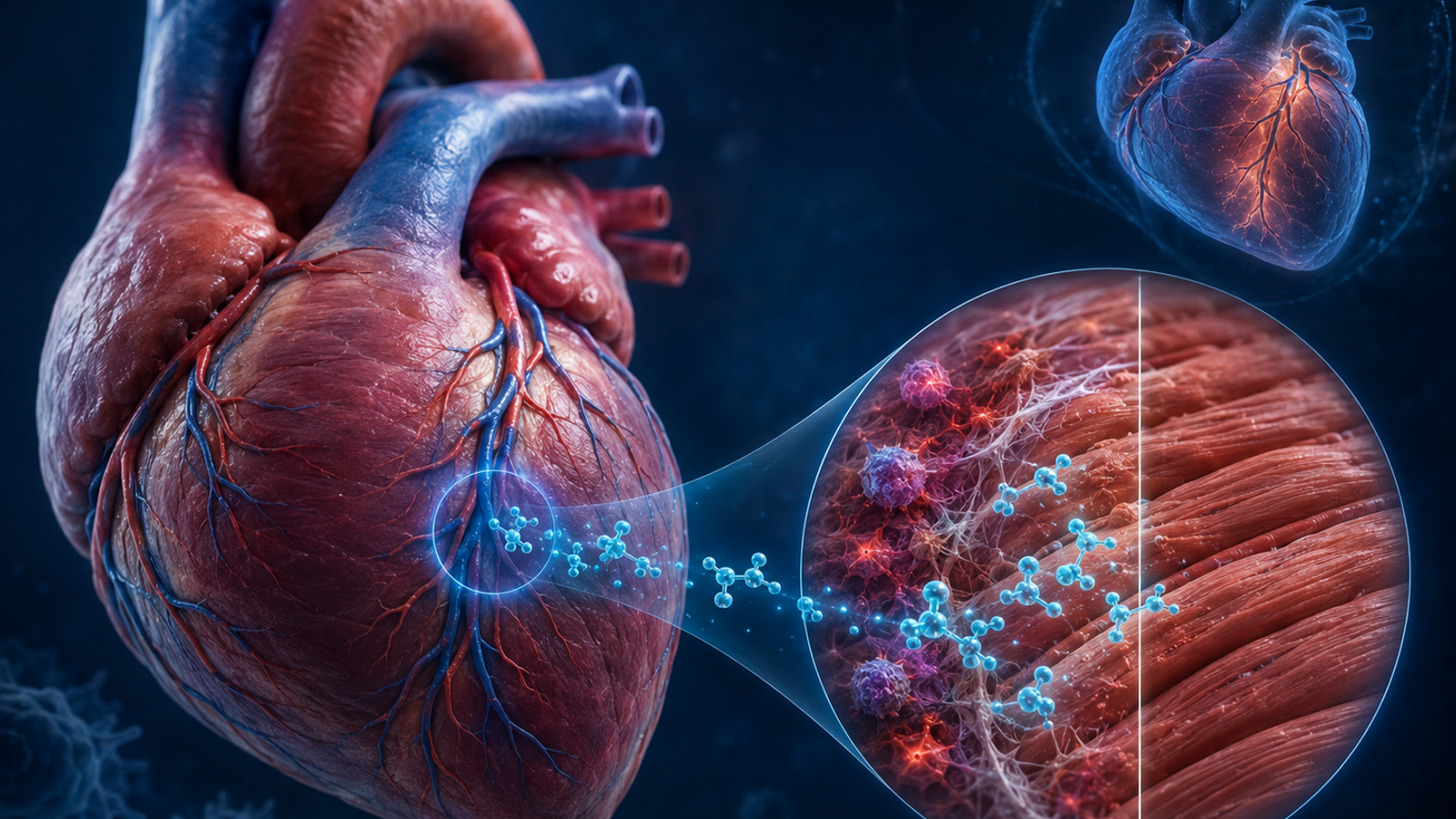
The study found that administering BT2, a small-molecule MAPK kinase/extracellular signal-regulated kinase inhibitor, 24 hours before and during ischemia in rats before reperfusion reduced infarct size and preserved cardiac function. BT2 also prevented adverse left ventricular remodeling and scarring, and modulated genes associated with inflammation, fibrosis, and matrix production.

Mechanism

BT2 works by inhibiting the MAPK kinase/extracellular signal-regulated kinase pathway, which is involved in the regulation of inflammation and fibrosis in the heart. By reducing inflammation and fibrosis, BT2 can prevent the damage caused by ischemia-reperfusion injury and preserve cardiac function.

The discovery of BT2 as a potential cardioprotective agent is significant because it offers a new approach to preventing heart damage. Current treatments for heart disease often focus on repairing damage after it has occurred, but BT2 has the potential to provide preemptive cardioprotection, reducing the risk of heart damage before it occurs.

Therapeutic, Experimental, or Research Implications

The study suggests that BT2 could be used to prevent myocardial ischemia-reperfusion injury in patients undergoing PCI or other procedures that involve ischemia-reperfusion injury. Further research is needed to determine the safety and efficacy of BT2 in humans, but the results of this study are promising.

Future Directions

Future studies should investigate the safety and efficacy of BT2 in humans, as well as its potential uses in preventing heart damage in patients undergoing PCI or other procedures. Additionally, research should focus on understanding the mechanisms by which BT2 provides cardioprotection, and how it can be optimized for clinical use.

Conclusion

The discovery of BT2 as a potential cardioprotective agent offers new hope for the prevention of heart damage. While further research is needed to fully understand its effects, the results of this study are promising, and BT2 may one day become a valuable tool in the fight against heart disease.

Cardioprotection Breakthrough